Route intelligence
Access, weather and trail condition checked before departure.
 OFFGRIDBOSNIASarajevo / BiH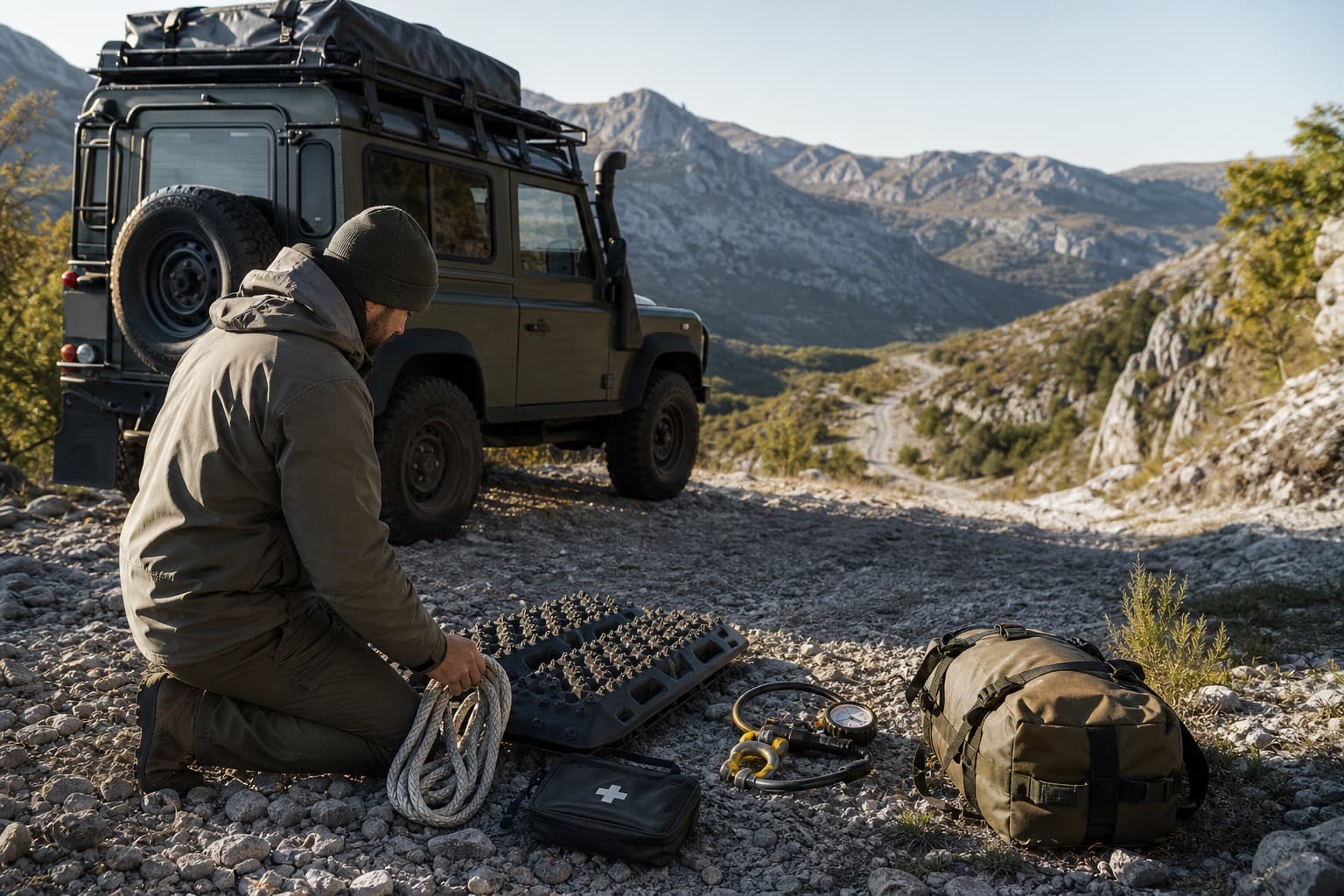
Routes are scouted, weather is monitored, and every departure begins with a clear briefing. We change the plan before conditions make the choice for us.
Ask a safety questionAccess, weather and trail condition checked before departure.
Gear matched to the activity, route and group size - vehicle, rope or trail kit.
Turning around is an operational success, not a failure.
It is a loop that stays active for the entire route - and it looks a little different for each activity we run.
Whether you ride with a guide or drive your own vehicle, every jeep tour runs the same loop: check, brief, watch the terrain, adjust.
Vehicle, tyres, recovery points and communications are checked, and every guest gets a seatbelt-and-handhold briefing before the engine starts.
The guide reads the terrain ahead and calls the line. Steep or loose sections are walked first when the call is close.
We use a lower alternative, wait it out, or turn back. A missed viewpoint costs nothing; a stuck or damaged vehicle costs the whole day.
No. Rough terrain carries inherent risk. Our job is to identify, communicate and reduce it through planning, equipment and conservative decisions.
Self-drive guests get a briefing and an easier line before anything technical. If a section is beyond your comfort, we swap you to passenger for that stretch.
Multi-vehicle self-drive routes add a second layer on top of jeep basics: keeping every car in the group moving at the same safe pace.
Convoy order, radio channels and spacing rules are set, and every driver gets the same terrain and weather briefing.
The lead vehicle sets the pace, a sweep vehicle closes the group, and radios keep every car in contact between them.
The convoy holds. One person directs recovery or repair; nobody drives on until the group is whole again.
Anyone can call a stop for a concern. The expedition lead makes the final decision on route continuation.
Route-appropriate rated straps, soft shackles, tyre equipment, tools, first aid, fire extinguisher and communications. Winch support is assigned where terrain requires it.
Cable, harness and rock replace vehicle and trail, but the same loop applies: check the gear, watch conditions, and know when to turn back.
Harness, lanyards and helmet are fitted and checked, and the route grade is matched to the group's ability before anyone touches the cable.
Guides keep spacing between climbers on exposed sections and set the pace to the least experienced person in the group.
Wet rock, wind and lightning risk end a climb immediately. We retreat to the nearest safe anchor point rather than push for the top.
No. Via ferrata routes are graded, and equipment and technique are covered in the pre-climb briefing. You do need a reasonable head for heights.
Say so. Guides can clip you off at the nearest safe point and arrange a controlled descent; you are never left on the cable.
No vehicle and no cable, but the same discipline: know the route, watch the weather, and keep the group together.
Route, water sources, weather and daylight hours are checked, and the group is briefed on pace, layers and the turnaround time.
The guide sets a pace matched to the slowest hiker, and the group stays within sight of each other on exposed or narrow sections.
We hold, reroute to a lower path, or turn around at the pre-set turnaround time - whichever comes first, regardless of how close the summit is.
Each route lists a difficulty grade and elevation gain. Tell us about any concerns before booking and we can suggest a better-matched route.
The guide slows the group or, on longer routes, a second guide can walk back with anyone who needs to stop early.
A night outdoors is where small oversights become uncomfortable ones. The camp is chosen, set and left with the same care as any route.
We camp on ground checked for drainage, falling branches and flood risk, at a distance from water sources that protects both you and the water.
Fires are lit only where permitted and where they can be fully contained, kept small, and put out cold before anyone sleeps.
Food is stored away from tents, one guide stays reachable through the night, and the site is left with nothing but flattened grass behind us.
Tents are provided on trips that include camping. Sleeping bags you normally bring yourself, though a rental can usually be arranged with your guide in advance - ask when you enquire.
Facilities vary by site and are listed on each tour page. On remote camps expect to dig a cathole well away from water, and bring biodegradable soap.
Mountain nights in Bosnia run far colder than the days, even in summer. We tell you the expected overnight low before departure so you can pack a bag rated for it.